Monday, September 9, 2019

Clinical Studies For Children Are Gaining Popularity Among Parents

Clinical studies for children are becoming more popular as more research and results are showing promise in the treatment of childhood disorders. If your child suffers from any kind of disease or condition, from cancer to asthma, you understand the struggle to find the right treatment with the least side effects.

This is exactly why doctors and researchers are conducting clinical studies on children; they want to find cures for childhood diseases and conducting research studies on children is the only way to get new and existing treatments out into the world for widespread use.

How Clinical Studies for Children Work

Every clinical study is led by a protocol. The protocol helps establish what the trial will study, who may be a good candidate, what treatments will be used, and how the results will be measured.

Studies are randomized and controlled, with the children separated into groups. The groups in the “experimental” category will receive the treatment that is being tested. There’s also the “control” group who will continue with whatever their normal, traditional treatment is, or they take a placebo pill.

The children in the studies aren’t aware if they’re taking the placebo or the new treatment, that way their perceived response won’t be influenced by whether or not they’re taking the real medication. Sometimes, studies are “double-blind” where the children and the researchers are unaware of who’s taking the real drug.

Once the study is over, researchers should have enough data to analyze that will tell them how successful the new treatment was.

What Children Can Participate?

Each study has different criteria to determine who is a candidate. Most often, children with an illness that aren’t responding to current treatment or who may benefit from potential new treatments are the best candidates for studies.

Your child’s doctor can help you decide if your child is right for a particular trial. If your child is a good candidate for a trial, they still have to meet the specific requirements unique to that study. Things like age, gender, and medical history are taken into account when choosing who will participate in a given study.

Benefits of Clinical Studies for Children

Clinical studies for children continue to increase in popularity thanks to the success they’ve seen in recent years. There’s some controversy over whether or not its ethical to put children in clinical trials, however, for treatments that are created for children, they must be trialed on children.

Adults and children react to medications and treatments differently, making it imperative that children be the ones that are used to trial the treatment. That being said, there are a number of amazing benefits to clinical studies for children and the risks are usually very low thanks to the extensive research that’s conducted before the trial even begins.

Participating in a clinical trial means your child is helping to shape modern medicine, helping find treatments for other children, and creating a new standard of care. Additionally, the more effective the treatment, the more likely your child will benefit from the cutting edge treatment that they wouldn’t yet have access to otherwise.


source https://miamiclinicalresearch.com/clinical-studies-for-children-are-gaining-popularity-among-parents/

Wednesday, September 4, 2019

What Can A Parent Do When Their Child Suffers From ADHD?

If your child has been diagnosed with ADHD, you’re likely feeling a little overwhelmed with all the information out there. You’re desperately trying to figure out what to do to help your child cope with his or her condition.

ADHA, or attention deficit hyperactivity disorder, is a complex disorder that can affect everything from how well your child performs at school, to their relationships. As a parent, you want to do everything you can to help your child and minimize their symptoms.

This article will help you answer the question “what do you do when your child suffers from ADHD?” and how you can help your child navigate life with this disorder.

Signs of ADHD

There are a number of signs and symptoms that are indicative of ADHD. Whether your child has been officially diagnosed with this disorder, or you have an inkling that he or she may have it, here are the top symptoms: 

  • Self-focused behavior
  • Interrupting when others are talking
  • Difficulty waiting for their turn
  • Fidgetiness or difficulty sitting still
  • Difficulty controlling their emotions
  • Lack of focus
  • Daydreaming
  • Difficulty getting organized
  • Forgetfulness

Your child may suffer from one or many of these symptoms. If you feel that your child is exuding unusual symptoms that are interfering with their ability to function normally, talk to your doctor about treatment options.

ADHD Treatment

The good news for parents with children who suffer from ADHD is that it’s treatable. There are many current medications that are used to treat symptoms of ADHD, but researchers are working on new medications to act as an add-on drug that further controls impulses and outbursts.

Clinical trials are being conducted right now to research the effectiveness of new treatments for ADHD that can help children who suffer better manage their condition and their behavior. If your child has been diagnosed with ADHD, check to see if there any research studies near you, your child could have access to cutting edge medication and specialists.

Traditional treatment methods include: 

  • Central nervous system stimulants (Adderall, Ritalin, etc.)
  • Nonstimulant medications (anti-depressants)
  • Psychotherapy
  • Behavior therapy 
  • Social skills training
  • Support groups

Your child’s doctor will recommend the best treatment for your child and his or her specific symptoms of ADHD. 

How Parents Can Help

Although you may be feeling confused and overwhelmed with your child’s diagnosis, it’s imperative that you remain calm and do what you can to minimize the stress both you and your child are feeling.

Aside from taking your child to his or her doctor to get their professional advice and treatment recommendation, ask about clinical trials for children with ADHD and see if your child would be a good candidate.

This is a heavily researched aliment, and researchers believe they can find better ways to treat symptoms.

It’s also important that you take care of yourself during this difficult time so that you can best care for your child and their needs. There are parent support groups and counseling that focus on helping parents of children with ADHD to cope with their diagnosis.


source https://miamiclinicalresearch.com/what-can-a-parent-do-when-their-child-suffers-from-adhd/

What Do You Do When Your Child Suffers From Low Iron?

Low iron in children can be relatively common, however, parents are usually alarmed when they get the diagnosis and frantically search for what to do when their child suffers from low iron.

In this article we’ll cover what low iron means, what the symptoms are, and what you can do if your child suffers from low iron.

Why Iron Is Important For Children

Iron is an essential nutrient in your child’s diet because it helps support their growth and development. Iron helps to move oxygen from your child’s lungs to the rest of their body and also helps their muscles to use and store oxygen.

If you child’s diet is lacking in proper iron, he or she may develop iron deficiency, or low iron. There are many degrees of low iron, from mild cases to anemia, which is a condition that occurs when the blood lacks adequate healthy red blood cells.

Any degree of low iron can affect your child’s growth and development, making it vital that healthcare providers track iron levels in children and make sure parents know how to bolster iron levels when they’re low.

The good news is, low iron in children can be treated and prevented.

Low Iron In Children: Risk Factors

There are a number of risk factors for infants and children when it comes to iron deficiency, including:

  • Babies who are born prematurely
  • Babies who drink cow’s milk or goat’s milk before age 1
  • Breast-fed babies who aren’t supplemented with iron-rich foods after age 6 months
  • Formula-fed babies whose formula doesn’t contain added iron
  • Children aged 1 to 5 years who drink in excess of 24 ounces of cow, goat, or soy milk per day
  • Children aged 1 to 5 years who have been exposed to lead
  • Children on a restricted diet or who suffer from chronic infections

My Child Has Low Iron, What Do I Do?

First, if your child has been diagnosed with low iron, don’t panic. There are a number of reasons why your child may be suffering from this condition and there are ways to remedy it, including:

Serve Iron-Rich Foods

When your baby is old enough to ingest solids, anywhere from 4-6 months, feed him or her foods with added iron. Iron-fortified cereal, pureed beans and pureed meats all contain a wealth of extra iron. For older children, you can encourage more red meats, chicken, beans, fish, and dark leafy veggies.

Control Milk Intake

Monitoring your child’s milk (cow, goat, soy) intake and ensuring they aren’t getting more than 24 ounces in one day.

Increase Vitamin C

Vitamin C helps to promote the absorption of iron in the body. Offer your child citrus fruits, strawberries, bell peppers, tomatoes and dark green veggies. 

Iron Supplement

If your child’s doctor determined that iron levels are low, they may prescribe an iron supplement that can be taken as a liquid or a pill. These treatments usually last for a 3 month period to help iron get absorbed into the body. Following this treatment, utilizing the other methods to increase iron in the diet will help keep the levels where they should be.

Participate In Clinical Trials

There are a number of clinical trials being conducted right now that are testing new treatments designed to treat children with low iron. By participating in these clinical trials, your child can have access to new, cutting edge medicines and treatments that may work better and faster than any other traditional treatment option.


source https://miamiclinicalresearch.com/what-do-you-do-when-your-child-suffers-from-low-iron/

How to Apply for a Clinical Trial

Clinical trials help researchers make it possible to apply the latest scientific and technological advances to health care. Whether a clinical trial is being conducted to test a new drug, treatment, or device, the purpose is to find new and improved methods of treating, preventing, and diagnosing different diseases.

In order for researchers to test new technology, they must have people to participate in research studies. Of course, any new treatment is extensively tested and researched before humans are ever exposed to something new.

Those who participate in clinical studies are helping advance the future of medicine. Most clinical studies are paid, so you can give to the medical community and get rewarded with a nice payout, too.

How to Apply For a Clinical Study

The first step in applying for a study is to find one that you’re interested in applying to. Some studies require that you have a certain condition or illness, while others require healthy adults. You can visit clinicaltrials.gov to search for a research study near you that fits your criteria.

Once you have a study that you’re interested in, the next step is to reach out to the entity that’s running the study. Your next steps will look something like this: 

  • Screening: Once you get in contact about available studies, you’ll be asked a few screening questions to be sure you’re a match. If so, you’ll continue onto the next phase.
  • Physical: Before being accepted into a clinical trial, you must have a physical assessment to verify the state of your heath. This is also the step where you can ask medical professionals any questions you may have about the trial, possible side effects and how it may affect you.
  • Participation: If you pass the physical requirements of the trial and you’re satisfied with the conditions of the study, you’ll move on to the participation aspect which will look different for each unique study.

As you can see, applying for a clinical study is not difficult, but it does take some time to make sure that you’re a good fit for the trial and that you understand all that’s involved with your participation. Miami Clinical Studies

Benefits of Participating In a Clinical Study

There are so many wonderful benefits to participating in clinical trials. If you’re thinking of applying for a clinical study, consider these benefits:

  • You get the unique opportunity to benefit from new and exciting research that may be more effective than traditional treatments.
  • You’re helping to advance medicine and improve the lives of others.
  • You’re getting access to some of the best, most innovative doctors available.
  • You get paid to help find cures. 

Want more information on how to apply for a clinical study near you? The team here at Miami Clinical Research has exciting new research studies available in the greater Miami area!


source https://miamiclinicalresearch.com/how-to-apply-for-a-clinical-trial/

Wednesday, July 24, 2019

How Women Can Find Relief From Endometriosis

Endometriosis is an unpredictable and painful disease. According to The Endometriosis Foundation of America, “An estimated 200 million women worldwide are impacted by this disease, and an estimated 1 out of 10 women suffer in the United States. However, many more women remain undiagnosed.”

Endometriosis affects a woman’s reproductive organs. This disorder occurs when the endometrium (the tissue that lines the inside of the uterus) is growing outside of the uterus. Endometriosis often occurs in the tissues lining the ovaries, fallopian tubes, and the pelvis.

Symptoms of Endometriosis

A prominent symptom of endometriosis is pelvic pain. This pain will often increase during the menstrual cycle. What would normally be subtle cramping is magnified, causing severe pain in women with endometriosis. Other symptoms include, but are not limited to:

  • Painful urination or bowel movements
  • Heavier bleeding during the menstrual cycle
  • Nausea/vomiting
  • Feeling overly fatigued
  • Pain during and after intercourse
  • Diarrhea/constipation
  • Bloating
  • And in some extreme cases, infertility

Unfortunately, there is no way of preventing endometriosis. Once an individual is diagnosed, there are ways to treat the symptoms of the disease.

Research Studies for Endometriosis

Those individuals suffering from endometriosis and not responding well to current treatment may find help participating in research or clinical studies for endometriosis. While all studies carry some risk (as do all types of treatments), they also have many advantages and can offer hope to those for whom traditional medicine is not working.

Benefits of Research Studies for Endometriosis Include:

  • Access to cutting edge treatments not currently available through your primary physician
  • Meticulous care and attention from some of the best doctors in the field
  • Free or low-cost treatment, with most clinical trials paying for some or all of your expenses
  • Contributing to medical research that may end up helping millions of others
  • Taking an active role in your health and care

Ways you May be Able to Alleviate Endometriosis At Home

The symptoms of endometriosis are treatable without having to see a specialist. Some ways to treat the pain at home include:

Heat: 

Cramping can be relieved by placing a heating pad over the pelvis to relax muscles. A hot bath or hot water bottle may also be used to find relief.

Massage : 

While using massaging oils, the pelvis can be lightly massaged to help relax the muscle. Women reported that massaging the pelvis, back, abdomen, and sides before a menstrual cycle helped reduce discomfort. It’s not recommended to massage these areas while menstruating, and doing so may increase pain.

Over The Counter Anti-inflammatory Drugs:

Pain is often caused by inflammation. Using an OTC drug, such as Naproxen or Ibuprofen, can help lessen the discomfort caused by severe cramping.

Herbal Supplements:

Using supplements can also help reduce inflammation. Turmeric and Omega-3 can both be used to treat inflammation.

Dietary Changes:

Making dietary changes is a long term treatment. Staying away from foods that can cause inflammation will help ease the bodies reaction to the menstrual cycle. Inflammation can be lessened by avoiding dairy, caffeine, alcohol products, and foods that are high in sugar.

It’s also wise to increase the intake of foods that help fight inflammation. These include leafy green vegetables, blueberries, salmon, ginger, and chia seeds.

When to See A Doctor:

If any severe symptoms persist during or after the menstrual cycle, it would be wise to see a doctor. There is testing that can be done to diagnose an individual with endometriosis properly. A doctor will want to do a physical exam, order an ultrasound, or even perform a laparoscopy. Once diagnosed, it is easier to treat the symptoms accordingly.

In severe cases, infertility has been a result of endometriosis. Consulting with a doctor will allow for a better understanding of the severity of the disease.

Source:
The Endometriosis Foundation of America
https://www.endofound.org/endometriosis


source https://miamiclinicalresearch.com/how-women-can-find-relief-from-endometriosis/

Wednesday, February 27, 2019

Why Research Studies Are Important

Research studies are critical in the progress and advancement of diseases and disorders and finding their cures and best treatment methods. 

Research studies are an important step in discovering new treatments for diseases as well as new ways to detect, diagnose and reduce the risk of the disease. 

Clinical trials show researchers what does and does not work in people participating in the research. These studies also help doctors and researchers to decide if the side effects associated with the new method of treatment are acceptable when compared against the benefits that the new treatment offers. 

Researchers don’t know what the results of their studies will be, if they did, they wouldn’t have to go through all the trouble to conduct the study. This uncertainty can cause many potential participants to take pause before consenting to participate in a trial. 

The number of cases in which clinical trials have adversely effected patients is small as such occurrences are extremely rare. In fact, there are hundreds of thousands of people who have been helped and are alive and well because others chose to participate in a trial that resulted in new and more effective treatments for their disease or condition. 

While the importance of clinical trials cannot be understated, it is important to understand that the decision to participate in a study is very personal and depends on each person’s unique situation. 

Some research studies are conducted on participants with a certain disease, such as breast cancer. While other studies require that the participant be of good health. 

As with any medical treatment, it is important that anyone considering participation consult with their doctor beforehand to discuss the potential benefits and risks associated so that you can make the best, most informed decision for you. 

Over the years, research studies have helped the medical field with everything from developing vaccines that have eliminated childhood diseases to finding drugs that safely reduce cancer symptoms. Without willing participants, researchers would not be able to unveil their discoveries and make them available to the public. 

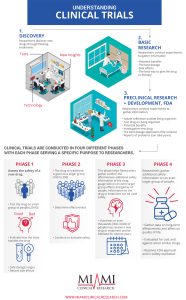
There is a lot of work and research that goes into new treatments and medicines before they are even eligible to make it to the clinical trial stage. In fact, it is estimated that about 1,000 potential medicines are tested extensively before one of them makes it to the research study phase. 

On average, new medicines and treatments are tested for between 5-8 years before a clinical trial is conducted to test them on humans. This knowledge should help potential participants rest easy knowing that they are not being human Guinea pigs for a fly by night treatment, they are testing a treatment that has been extensively researched and thoroughly tested for years. 

The advancement of the medical field relies on successful research studies to continue its advancement. Scientists have made major breakthroughs over the past few decades and with today’s technology, we are on course to find cures to our biggest, deadliest diseases. 


source https://miamiclinicalresearch.com/blog/why-research-studies-are-important/

Research Studies for Kids Gain Mainstream Approval

Research studies for kids has long been a controversial topic, however, it is starting to gain mainstream approval thanks to the many benefits that are being highlighted. 

When it comes to research studies for children specific diseases and aliments, many parents want to know if participating in the study will help THEIR child. 

It is important to understand that research studies are conducted to gain information about a disease, condition, treatment, or drug that is hoped to help benefit children in the future. This is different from regular medical treatment that is given to help a specific child who is dealing with illness. 

That being said, while most studies are not done to help a specific child, there are immense benefits to conducting the study and the participants can definitely reap some of them. 

Making the Future Brighter for New Generations 

One of the biggest benefits to research studies for kids that is helping them gain mainstream approval is the fact that the research done will help future families in similar situations. 

Thanks to the parents of the past whose children dealt with awful diseases such as polio or measles and they made the decision to allow their child to be in studies to test vaccines, we no longer need to worry about these diseases in today’s generation. 

There are many procedures, treatments and medicines being created today to help combat childhood disease, but they will not be accepted for use until they are proven to be safe and effective. The only way to properly do this is to conduct research studies on the group they are intended to help, children. 

Access to New Drugs and Treatments 

Researchers are constantly testing new drugs and treatments because they have reason to believe that they may be superior to the current standard of care. By participating in a study, children have access to something that is not available to others yet but may be very beneficial. 

Children who participate in research studies may be among the first to benefit from the new drug or treatment. Additionally, enrolling children in a clinical study means that they are seeing extra doctors and specialists in the field which can help shed more light on the child’s present condition. 

Constant Monitoring 

If a child is dealing with an unfortunate illness or disease, enrolling them in a research study means that they will likely receive closer monitoring and additional testing that they may not receive under standard care. 

Children participating in clinical studies are watched closely for side effects and to monitor how the treatment is working. Every research study for kids is subjected to stringent regulations. 

With technology and medicine improving daily, it is vital that research studies be conducted to help get these new medicines and treatments on the market to help children of the future. 

Treatments and medicines that are engineered to treat childhood disease must be tested on children in order to ensure the safety and effectiveness of the treatment. 

Fortunately, research studies for kids are gaining mainstream approval and being conducted more regularly which will help continue the fight to eliminate childhood diseases. 


source https://miamiclinicalresearch.com/blog/research-studies-for-kids-gain-mainstream-approval/